

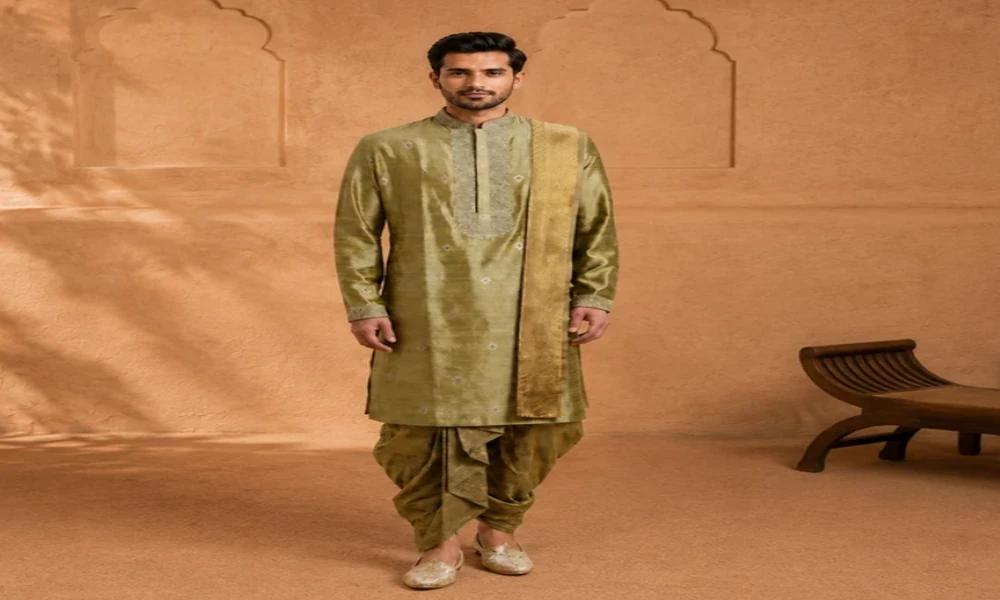
Not every Indian wedding function calls for a sherwani or heavily structured outfit. Haldi ceremonies, mehendi celebrations and family pujas usually work better with clothing that feels festive without restricting movement. That is where the kurta-pyjama and dhoti-kurta earn their place. For anyone looking for a kurta pajama for men in Hyderabad, the smartest approach is to think beyond decoration and consider the function, weather, fit and amount of sitting or movement involved.
These outfits may be traditional, but they do not have to look predictable. Contemporary colours, cleaner fits, textured fabrics and restrained accessories can make them feel current while retaining the ease that makes Indian clothing so practical for daytime celebrations.
Why These Traditional Outfits Still Work
A kurta-pyjama is one of the most adaptable combinations in a wedding wardrobe. Change the fabric, colour or footwear and the same basic silhouette can move from a simple morning puja to a lively mehendi.
A dhoti-kurta creates a more distinctly traditional impression. It can be particularly effective for ceremonies where you want an outfit that feels rooted in Indian dressing without the weight of formal wedding wear.
Comfort is another advantage. Many pre-wedding events involve sitting cross-legged, moving between rooms, greeting relatives and spending hours outdoors. Clothing that allows natural movement often makes more sense than tailoring designed primarily for formal photographs.
Choosing a Kurta Pajama for Men in Hyderabad for Haldi
Haldi is colourful, energetic and potentially messy. Your outfit should acknowledge all three realities.
When choosing a kurta pajama for men in Hyderabad, lightweight construction and freedom of movement are sensible priorities for a haldi function. Hyderabad can remain relatively warm even during parts of India’s broader winter wedding season, particularly during daytime events, so avoid assuming that a December wedding automatically requires heavy fabric.
Choose Colour With the Ceremony in Mind
Yellow remains an obvious haldi choice, but it is not mandatory. Ivory, off-white, pale green, muted orange and earthy shades can work equally well, depending on the wedding palette.
If you know friends and relatives will enthusiastically apply haldi to your clothes, do not wear something so precious that you spend the entire function trying to protect it. The point is to participate.
Subtle threadwork or texture can provide enough visual interest without turning a relaxed daytime outfit into formal reception wear.
Give Your Mehendi Look More Personality
Mehendi functions often allow more experimentation than religious ceremonies. Music, colourful décor and relaxed dress codes make them a good opportunity to introduce pattern and stronger colour.
Deep green is a natural option, but teal, rust, mustard, dusty pink, blue and jewel tones can all work. A patterned kurta can also look effective when paired with simple bottoms.
If your kurta has significant embroidery or print, keep the pyjama understated. If the kurta is minimal, you can introduce personality through a waistcoat, textured footwear or a small accessory.
Add a Layer Only When It Makes Sense
A sleeveless jacket can transform a simple kurta-pyjama, but consider the weather before adding one. Outdoor afternoon mehendis can become warm quickly, especially if you are dancing.
For a cooler evening event, a lightweight waistcoat can provide both visual structure and some warmth. Ideally, choose a layer that can be removed without making the outfit underneath look incomplete.
Consider a Dhoti-Kurta for Puja Functions
A puja often calls for simpler styling and greater respect for traditional dress expectations. A dhoti-kurta can be an elegant choice, particularly for family ceremonies or wedding rituals where traditional clothing feels appropriate.
Neutral shades are easy to work with. White, ivory, cream and pale gold create a clean base, while a coloured border or stole can introduce contrast.
The main challenge is practicality. If you rarely wear a traditional dhoti, do not make an important wedding ceremony the first time you learn how to manage one.
Pre-stitched or easier-to-wear interpretations may provide a similar visual effect with less adjustment, but the right choice depends on the expected dress code and your own comfort.
Get the Fit Right Without Making It Too Tight
Modern Indian menswear often uses cleaner, narrower silhouettes, but fitted does not mean restrictive.
A kurta should sit neatly across the shoulders and chest while leaving enough room to move your arms. Check the fit by sitting down, reaching forward and raising your hands rather than simply standing in front of a mirror.
The same applies to bottoms. A tapered pyjama can look contemporary, but you should still be able to sit comfortably during a puja or meal.
If you are buying a kurta pajama for men in Hyderabad for several hours of wedding celebrations, factor in real movement. A slightly more relaxed fit that remains well proportioned will usually serve you better than something that looks razor-sharp only when you stand perfectly still.
Pick Fabrics According to Weather and Timing
India’s wedding season spans dramatically different climates. Even within one city, an outdoor morning ceremony and an indoor evening celebration can demand different clothing.
For warm daytime events, lighter fabrics and breathable construction can improve comfort. For winter evenings, slightly heavier materials or removable layers may make sense.
Hyderabad’s winter is generally milder than winters in many northern Indian cities, so a heavily layered outfit may be unnecessary for a daytime function. Evening temperatures can still feel cooler, making a stole or waistcoat useful without committing to a bulky ensemble.
Also consider venue conditions. A crowded indoor mehendi can feel warmer than the weather forecast suggests, while a late-night outdoor puja may feel cooler.
Choose Footwear You Can Actually Wear for Hours
Traditional footwear can complete a kurta or dhoti outfit, but comfort deserves equal consideration.
Wedding functions often involve more standing and walking than expected. There may be long photo sessions, trips between venues or spontaneous dancing. Wear your chosen footwear around the house before the event instead of discovering pressure points halfway through the ceremony.
With simple kurtas, more decorative footwear can provide contrast. For an embroidered outfit, cleaner footwear often creates better balance.
If you are travelling for the wedding, pack footwear in a separate bag or shoe pouch so that dust from the soles does not transfer to light-coloured kurtas.
Use Accessories to Finish, Not Overload, the Look
Kurta-pyjama and dhoti-kurta outfits rarely need many accessories. One or two carefully chosen details are usually enough.
A classic watch works for almost every function. A stole can add ceremony to a puja outfit, while a simple waistcoat can make a mehendi look more structured.
Avoid automatically adding a brooch, necklace, elaborate footwear, stole and decorative jacket all at once. Traditional menswear can look more contemporary when there is some visual breathing room.
For a relatively detailed kurta pajama for men in Hyderabad, letting the embroidery or fabric provide the main point of interest is often the cleaner choice.
Coordinate With the Wedding Party Without Looking Identical
Coordinated outfits can look excellent in photographs, particularly for haldi and mehendi functions. However, coordination does not require everyone to wear the exact same garment.
Choose a shared colour family and allow individual variations in shade, texture or styling. One person might wear a plain sage kurta while another chooses a darker green with subtle embroidery.
Grooms can also coordinate with their partners by repeating a small accent colour rather than matching head to toe. This creates visual connection without making the outfits feel like uniforms.
Plan Ahead for Stains, Travel and Long Functions
Pre-wedding events are not controlled studio shoots. Haldi stains, food spills, outdoor dust and travel creases are all possibilities.
For a destination wedding, hang kurtas as soon as you arrive and check whether they require pressing. Follow the garment’s care instructions, particularly with embroidered or delicate fabrics.
For haldi, keep a change of clothes available if another event follows immediately afterwards. During a puja, make sure your dhoti or pyjama allows you to sit comfortably for the expected duration.
These small practical decisions can have a bigger effect on your experience than another decorative accessory.






Discussion about this post