

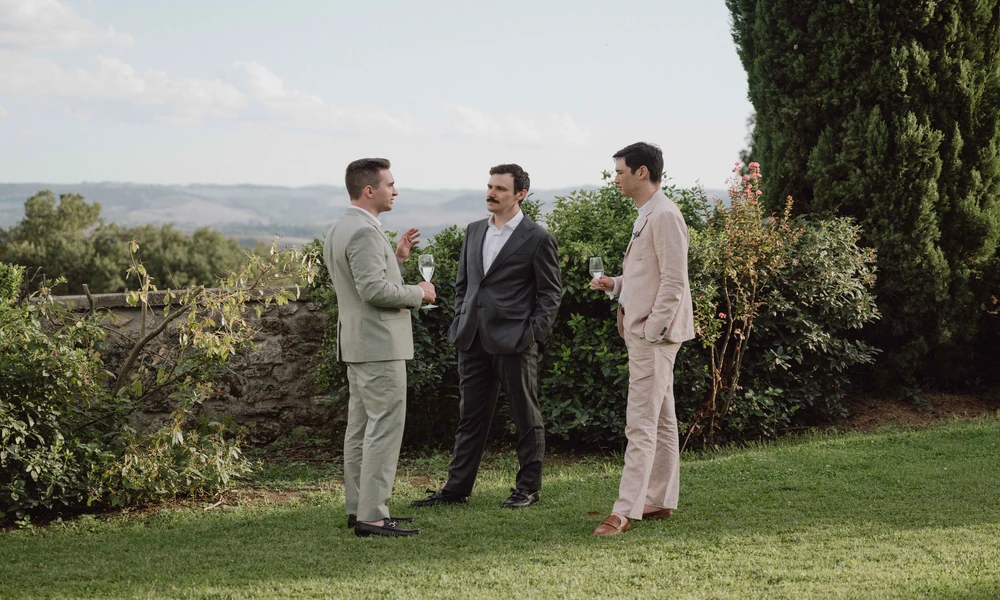
The romance of an outdoor ceremony is immediate. The practical work that makes it comfortable is less visible, but equally important. This guide looks at the decisions that make the experience practical, distinctive and enjoyable for international couples and their guests. Rather than offering a fixed formula, it considers the trade-offs that matter when planning in Umbria and elsewhere in Italy. The aim is to make choices based on the real setting, the season and the people attending.
Start with what the landscape offers
Gardens, courtyards and olive groves can provide an extraordinary backdrop without extensive decoration. Before choosing a ceremony spot, visit at the approximate time of day you intend to marry. The light, shade and temperature may be very different from the photographs taken at sunset. Ask whether the ground is level, where guests will enter and how chairs can be arranged so everyone can see and hear.
Weather planning is part of design
An outdoor wedding needs a genuine alternative, not a vague promise that a room will be found if necessary. Confirm the indoor capacity, furniture layout and decision deadline for moving the event. Discuss rain, wind and heat rather than rain alone. A covered area may still be uncomfortable in strong wind, and a summer lawn can be exposed to intense sun. The backup should preserve the atmosphere and flow of the day.
An outdoor celebration is also an exercise in restraint. The landscape can carry much of the visual story, so spend on practical comforts first: stable seating, shade, sound and lighting. Decoration then becomes an enhancement rather than a substitute for a workable event.
Protect the guest experience
Water, shade, seating and accessible routes are essentials, especially for older guests and children. Consider footwear advice when pathways are gravel or grass. If the ceremony is remote from the reception area, explain the walking distance and provide transport where needed. Outdoor sound can be difficult, so test microphones and check local restrictions. Guests should be able to enjoy the view without struggling to follow the ceremony.
The detail that is easy to overlook
Make a written weather decision plan with a named person responsible for the final call. The plan should include the decision time, the alternative layout and the suppliers who must be informed. This removes pressure from the couple when forecasts change.
Design the evening transition
As daylight fades, lighting becomes both decorative and functional. Pathways, steps and restrooms must be easy to find. Ask how food will be protected and served safely outdoors, and whether insects are likely to be an issue in the chosen season. A beautiful open-air dinner is the product of many practical decisions, from power supply to table stability. Good suppliers will discuss these details before installation day.
Match the venue to the event
Couples exploring an outdoor wedding in Italy should ask which areas are approved for ceremonies, receptions and music. A garden suitable for vows may not be appropriate for a full dinner service. Confirm noise limits, curfews and wet-weather arrangements in writing. The best outdoor setting offers beauty and reliable infrastructure, allowing guests to focus on the celebration rather than the conditions.
Putting the ideas into practice
Outdoor weddings are rewarding because the setting feels alive, but nature cannot be scheduled. A thoughtful plan makes space for its beauty while protecting everyone’s comfort. Prioritise practical questions early and the visual details will have a much stronger foundation.
A final planning note: request written confirmation of the arrangements that matter most, including the guest count, timing, weather alternatives and responsibilities of each supplier. Couples planning from abroad should allow additional time for questions and revisions. A clear, realistic agreement is a better foundation for a memorable event than any promise that everything will simply work out on the day.
One last consideration is how decisions will be communicated once the booking is confirmed. A concise schedule, a named contact for guests and written supplier responsibilities can prevent small misunderstandings from becoming problems. Ask for final details early enough to correct them, but avoid sending visitors a flood of updates. The strongest destination celebrations combine an unmistakable sense of place with clear information and flexibility. This practical balance gives the couple more freedom to enjoy the occasion and helps guests feel confident from arrival to departure.





Discussion about this post